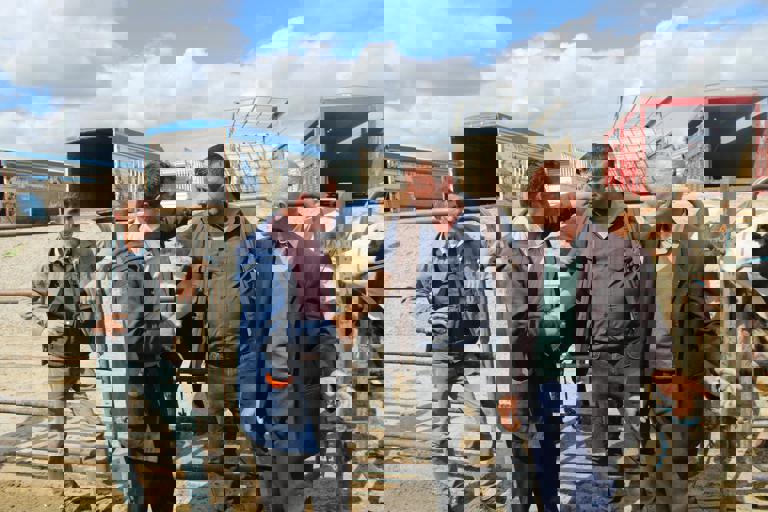
Trade negotiations between major economic partners have encountered a significant impasse as discussions surrounding agricultural subsidies have reached a critical point of contention. Delegates from both sides pressed their respective governments’ case in high-level meetings, seeking to protect domestic farmers and rural communities. However, these efforts have only highlighted the persistent rift in expectations and priorities, potentially putting a comprehensive trade agreement at risk if no compromise is found soon.
At the heart of the dispute lies an enduring disagreement over the level and scope of government support available to national farmers. One party accuses the other of maintaining unfair subsidies that distort market competition, placing foreign producers at a disadvantage. Conversely, negotiators for the accused side argue that agricultural support is essential to safeguard food security, rural employment, and the vitality of domestic agriculture in an increasingly volatile global market.
Farm subsidies have long been a contentious issue in international trade. Critics assert that large-scale government assistance can result in overproduction and dumping of surplus goods onto the global market, undermining farmers in countries with less robust support systems. A spokesperson for the opposition delegation stated, “We simply seek a level playing field. Excessive subsidies make it impossible for our producers to compete fairly.”
On the other hand, supporters of current subsidy regimes claim that abrupt reductions could devastate rural economies, leading to widespread unemployment and abandonment of family-owned farms. Economists note that the countryside remains a politically sensitive region, with many lawmakers reluctant to introduce reforms that could cost them significant electoral support. Consequently, pressure from both farming lobbies and rural constituents has resulted in a hardening of negotiating positions.
The latest round of talks included heated exchanges over tariff rate quotas and direct payments to farmers, subjects seen as vital to the survival of both large-scale and small-scale producers. Negotiators reportedly spent hours parsing the fine details of which products would receive protection and by how much. Insiders suggest that although some progress has been made on industrial tariffs, the agriculture file remains frustratingly unresolved.
Stakeholders from the farming sector have expressed anxiety about the outcome. Martina Lefebvre, a wheat farmer and trade advocate, said, “For many of us, these negotiations are about our livelihoods. Any changes to support systems could mean the difference between profit and loss or, worse, continuing the family tradition or selling the farm.” Such sentiments echo across rural communities, which often feel left behind by rapid globalization and shifting economic priorities.
Analysts warn that if the dispute over subsidies is not resolved, the broader trade deal could face substantial delays or even unravel altogether. Trade policy expert Dr. Alan Choi explained, “When it comes to cross-border agreements, agriculture is frequently the deal-breaker. Any impasse here can halt negotiations on more straightforward economic sectors and erode trust between partners.” This sentiment is mirrored in market reactions, with uncertainty already impacting agricultural futures.
Several proposals for compromise are on the table. Options include gradual phasing out of the most trade-distorting subsidies, increased transparency in how aid is allocated, and potential expansion of compensation packages for affected farmers. Still, such measures may not fully satisfy either side, as each party’s domestic political realities impose strict limits on negotiable terms, particularly during election cycles or times of economic uncertainty.
International organizations, including the World Trade Organization (WTO), have encouraged both camps to renew their commitment to finding a mutually beneficial resolution. The WTO has warned in a recent report that escalating trade tensions in the agricultural sector could have global ramifications, impacting food prices and stability in developing markets. Calls for patience, dialogue, and creative problem-solving have dominated the statements of mediators observing the negotiations.
Public opinion remains sharply divided. Urban consumers, often more concerned with food prices and environmental sustainability, view subsidy reform as a path to cheaper and possibly greener imports. In contrast, rural populations and agribusiness leaders push for strong protections to preserve their way of life. Polling data indicates that while the general public supports trade agreements, there is significant concern about any concessions that might affect local food producers.
Political leaders on both sides have acknowledged the difficulty involved in reconciling such deeply entrenched positions. One senior trade official was quoted as saying, “This is not just a matter of dollars and cents; it is about values, traditions, and the future of our communities. We owe it to our citizens to negotiate with both fairness and resolve.” Efforts are underway to temper rhetoric and keep communication channels open as negotiators prepare for another round of talks.
As the standoff continues, businesses and international investors are urging a swift and constructive resolution. Many companies depend on stable, predictable trading environments to make long-term plans and investments. Delays or breakdowns in negotiations could trigger price volatility, lost contracts, and a ripple effect throughout the entire global supply chain, intensifying the call for pragmatic solutions from negotiators on all sides of the dispute.